The Contradiction at the Heart of Animal Farming
5/28/20267 min read

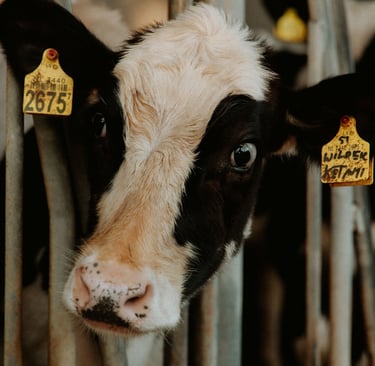
"We Care About Our Animals"
You'll hear the phrase everywhere in animal agriculture. Go to any farming website or watch a documentary, read an egg carton or listen to an interview and you are bound to hear it.
“We care about our animals.”
It's a comforting thing to hear, isn't it? It brings to mind the image of small farms with large open fields, and country folk looking after animals with patience and respect.
There will Likely be many farmers that will feel some form of attachment to the animals they raise. I mean, when you spend every day around these animals - feeding them, monitoring them, helping during difficult births or illness - some level of emotional connection is almost inevitable.
There is however, a reality underneath it all that is more troubling than many people realise. Even on the so called “high welfare” or "humane" farms, animals are still being forcibly bred and commodified for human use. Their lives are still organised around profit and production. And in the end, most are still slaughtered within a small fraction of their natural lifespan.
That tension sits right at the centre of modern animal farming, and people often struggle to talk about it honestly. Because once you stop focusing on the image of care and look more closely at the structure itself, there's an obvious contradiction that becomes quite difficult to ignore.
So the question isn’t really whether farmers are secretly cruel people. In most cases, they probably aren’t. The more difficult question is whether genuine care can fully coexist with a system built around ownership, exploitation, profit, and killing.
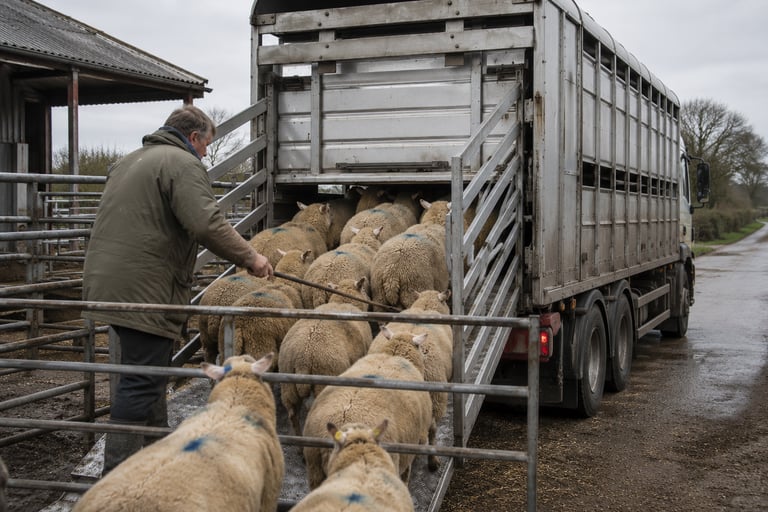
The Psychology of Caring While Causing Harm
The majority of us don’t want to think of ourselves as harmful. Farmers included.
But at the same time, animal farming requires people to do things to sentient beings that would deeply disturb many of us in any other context. Separation of mothers and babies, confinement, castration and bodily mutilation, selective breeding, slaughter. If similar things were done to animals we've come to emotionally identify with - dogs, for example - the public reaction would certainly be very different.
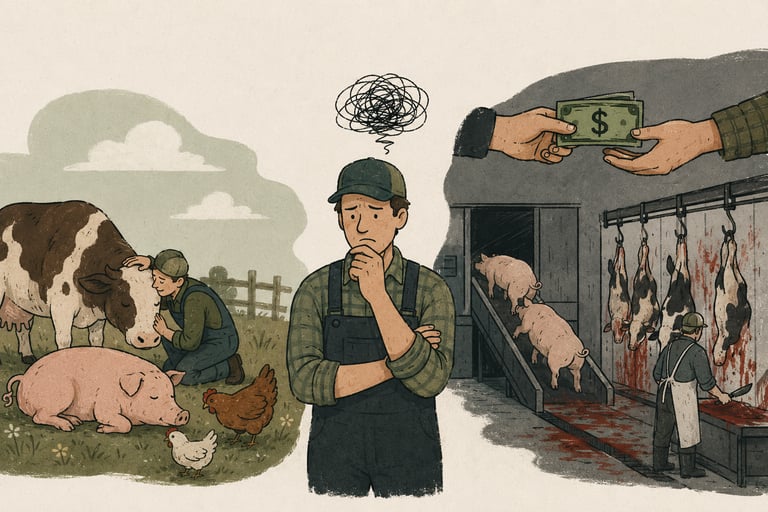
The answer lies in what psychologists call cognitive dissonance: the discomfort that comes from holding two conflicting ideas at the same time.
“I care about animals.”
“I participate in harming animals.”
As human beings, we are remarkably good at adapting morally to the systems we grow up inside, especially when those systems are normalised culturally and economically. So rather than questioning the structure itself, people often learn to reinterpret the situation.
We convince ourselves that the harm is necessary. Natural. Humane. Just part of life.
And once a narrative like that is repeated often enough, it becomes so familiar that it stops sounding like a story at all. It begins to feel like reality.
When Your Whole Life Is Built Around It
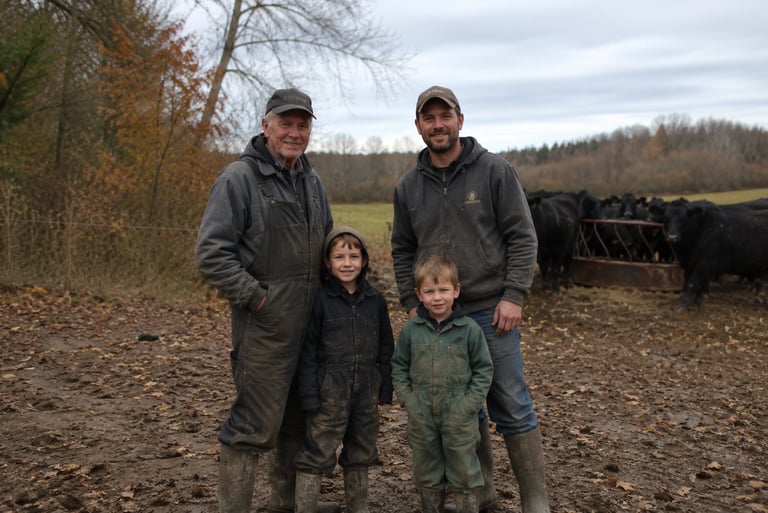
For many farmers, this isn’t simply a job they clock in and out of. It’s a job that can be tied up with things like family history, survival, identity, and community. Some of them inherit farms that have existed for generations. Others grow up being taught that farming is honest, respectable work — something to take great pride in.
That emotional and cultural attachment matters more than people sometimes acknowledge.
Questioning the ethics of animal farming can feel, to some people, like questioning their upbringing, their parents, or the life they’ve built around themselves. And when someone’s livelihood depends on the system continuing, there are obvious practical pressures too.
That doesn’t by any means excuse harm, but it helps explain why the contradiction is so rarely confronted directly. It’s psychologically easier to believe that care and exploitation can comfortably coexist than to examine what it might mean if they can’t.
We see industry messaging reinforcing this constantly. Farmers are presented as compassionate caretakers. Animals are described as “well looked after” or “part of the family.” The emotional language softens the underlying reality of what the system ultimately involves.
How Harm Becomes Normalised
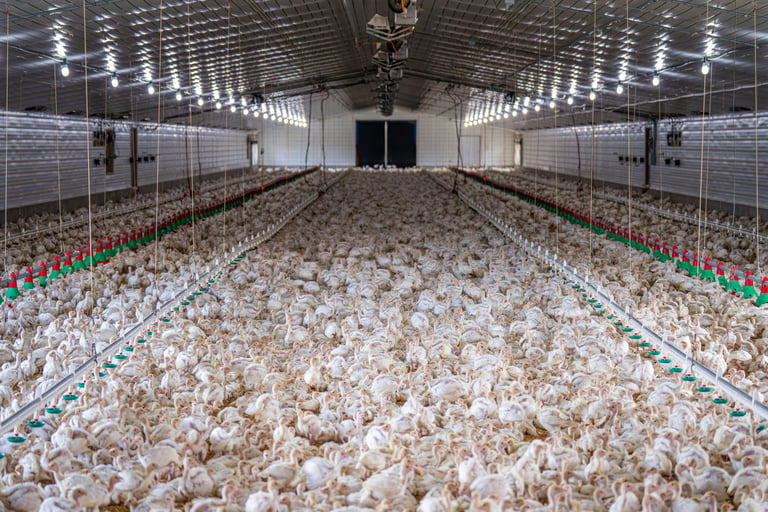
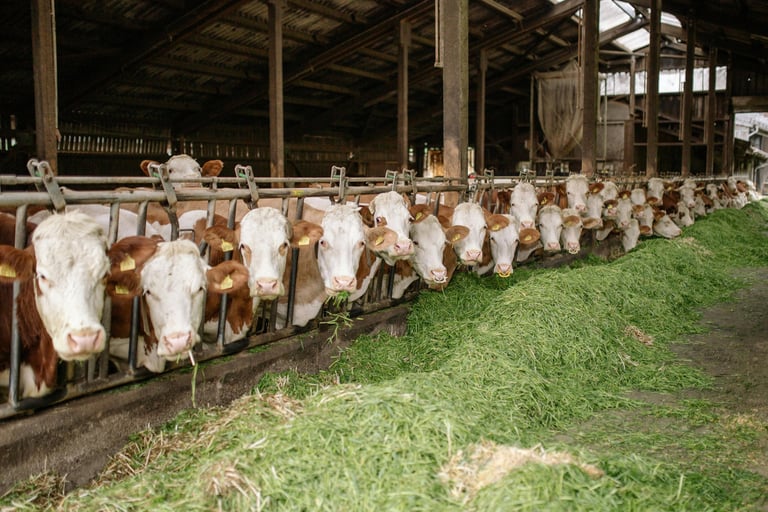
One of the most effective ways people can come to cope with causing harm is by creating emotional distance from it.
In animal agriculture, that distance often shows up through the language that's used. The word Slaughter becomes “processing.” Killing becomes “culling.” Animals become “livestock,” “stock,” or “units.” The more industrial the language sounds, the easier it becomes to avoid thinking too deeply about the individuals underneath it.
Responsibility is also spread out across the system. Farmers will produce what consumers buy. Consumers buy what shops sell. Companies will follow the demand. Everyone becomes just one part of a much larger machine.
And when responsibility is diluted across an entire culture, moral discomfort then becomes easier to deal with.
Now, none of this is unique to farming, by the way. Human beings do this in many areas of life. But animal agriculture depends on that emotional disengagement, because the system would be much harder to sustain if people consistently saw animals as individuals rather than products.
The Ideas We Grow Up With
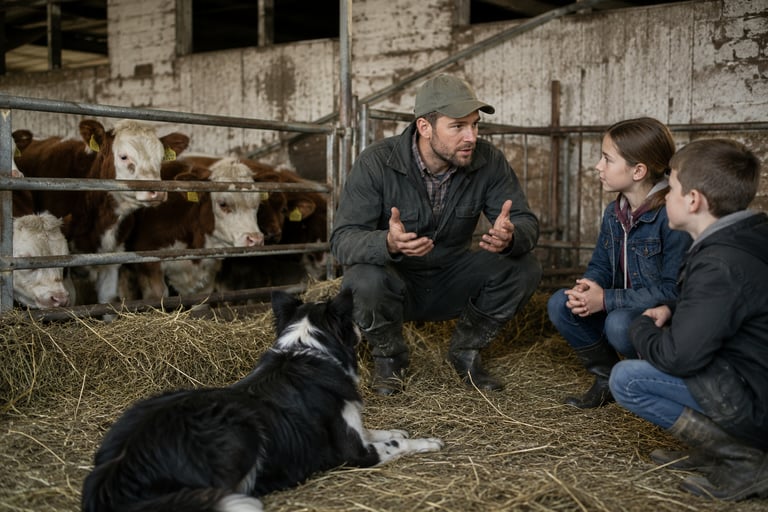
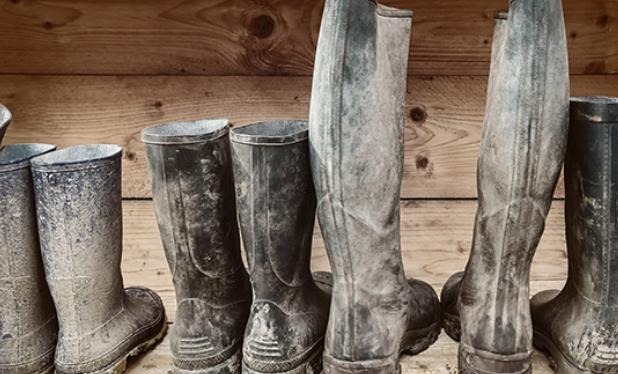
The majority of farmers don’t arrive at these beliefs through some calculated moral decision. They grow up around them.
If you’re raised in a farming environment, certain ideas are often presented just as simple facts of life: "animals are here to be used, farming them is necessary, slaughter is unfortunate but normal." By the time someone is old enough to question any of it, those assumptions can already feel woven into the foundations of their lives.
Questioning the system after that starts to feel deeply personal, especially in close farming communities where traditions are passed down across generations.
And of course, this conditioning isn’t limited to farmers. Most people are raised to love some animals while eating others without ever being encouraged to examine the inconsistency too closely. Children are taught to empathise with animals in storybooks and cartoons, while also being taught that certain animals exist mainly as food.
Because these ideas are absorbed so early, they rarely feel ideological. They just feel normal.
Selective Compassion and Speciesism
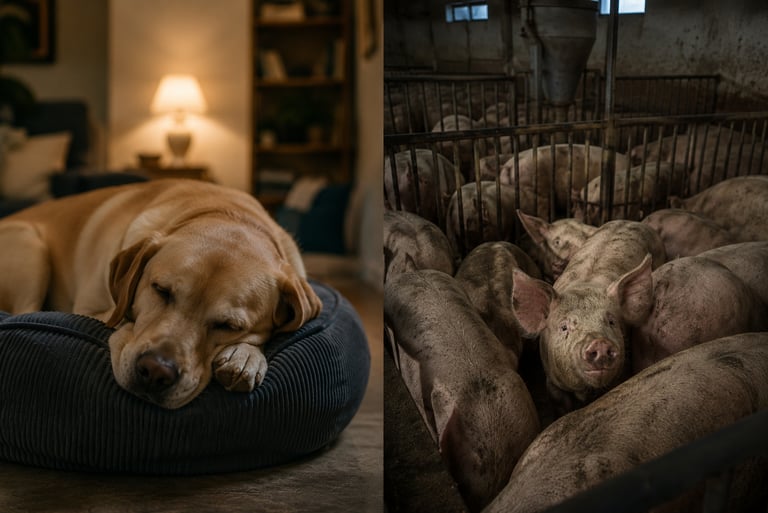
As i said earlier, there will many farmers that clearly do form emotional attachments to certain animals. Some speak affectionately about individual cows, pigs, or sheep in ways that sound completely sincere.
But there’s also usually a limit to that empathy. Once an animal’s interests begin to conflict with the economic purpose they were bred for, the relationship then changes. The emotional connection rarely overrides the role the animal serves within the system.
Most societies already make these distinctions all the time. People grieve deeply for dogs while eating pigs, despite pigs being just as, if not more emotionally complex. We're taught to categorise animals differently depending on our culture, perceived usefulness, familiarity, or traditions.
This is described as speciesism - the tendency to value certain animals more highly than others, often for reasons that have little to do with the animals themselves.
Farming didn’t create that hierarchy on its own, but modern animal agriculture depends heavily on it remaining unquestioned.
What Care Means Inside a System Like This
When farmers say they care about their animals, what they often mean is that the animals are fed, sheltered, medically treated when necessary, and not made to suffer more than the system requires.
And compared to outright neglect or sadism, that probably does feel like care.
But there’s still that difficult question underneath it all: what does care actually mean when the relationship itself is built around exploitation and eventual killing?
When we truly care about someone, we want and do what is best for them. We do everything we can to protect them from harm. But In farming, the animal’s well-being is only considered up to the point where they remain profitable. After that, consideration for their well-being is no longer as relevant to them.
If someone claimed to love their dog while repeatedly breeding her, taking away her puppies, and killing her once she stopped being profitable, most people would instinctively recognise that as abuse. The fact that society decided that cows, pigs, and chickens should be treated differently doesn’t change the ethics around what's happening. It just simply normalises the abuse.
How Good People Become Part of Harmful Systems
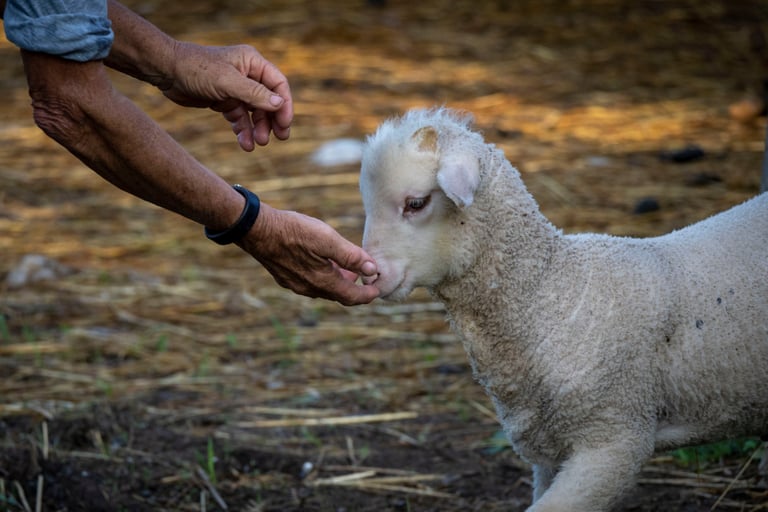
Conversations like this often become emotionally charged because criticism of the system is heard as criticism of every individual within it.
But those things are not always the same.
I don’t think most farmers are malicious people. Many of them are operating within traditions and industries that they inherited long before they ever would've thought to question them. Many likely believe they are doing their best within the world they were given.
At the same time, personal intention doesn’t erase the reality of what the system does to these animals.
I think that in understanding where these mentalities come from allow us to recognise how easily good, caring people can get sucked into participating in systems built around profound harm, particularly when those systems are normalised early enough, repeated often enough, and tied closely enough to identity, culture, and many other aspects of their lives.
Once animals are seen less as products and more as what they really are - individuals with their own experience of the world, who desire to live as much as any of us, the moral landscape starts to shift. And for those people, that shift then becomes difficult to fully reverse.


